
Bardot et moi
Trying to meet the (ex) most beautiful woman in the world

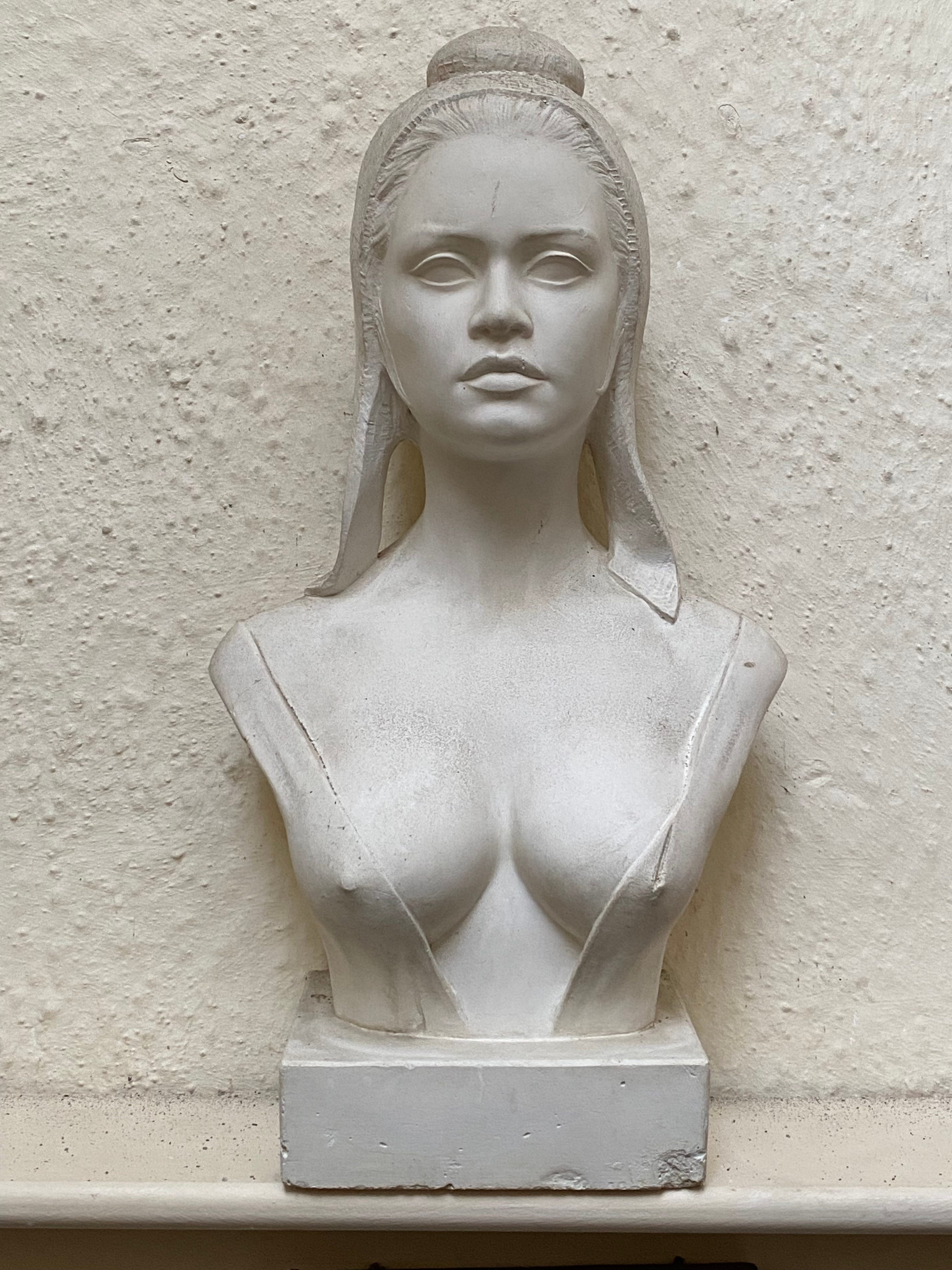
The last thing the world needs right now is another self-appointed expert in bardologie. But there was an article published the other day based solely on the writer having once seen Bardot in a market. And I’ve spoken to her on the phone, and I’ve got a bust of her as Marianne from a 1960s town hall, now worth five times what I paid for it furthermore, which makes me practically professorial level by comparison. So I’m having my ten centimes’ worth, as I finally let go of the last lingering idea that I might yet get to meet the legend, a strangely puerile ambition that I’ve nurtured for many decades, and almost achieved.
Lately I’d been thinking of having another go. Bardot was reported as having been hospitalised twice with respiratory problems during the autumn, and once as having died, a report she debunked online with sufficient zest as to make one think she might after all still be up for one more interview for the Brits. She’d done a number of French interviews around the time of her ninetieth birthday, but nothing for the Anglophone media. But now we learn she was seriously unwell, and her rather chaotic collection of animals in the domaine up the hill from her home had already started to be re-housed, and then at five fifty-five in the morning of Sunday after a quiet night she murmured the pet name of her husband waiting at her bedside and was gone.
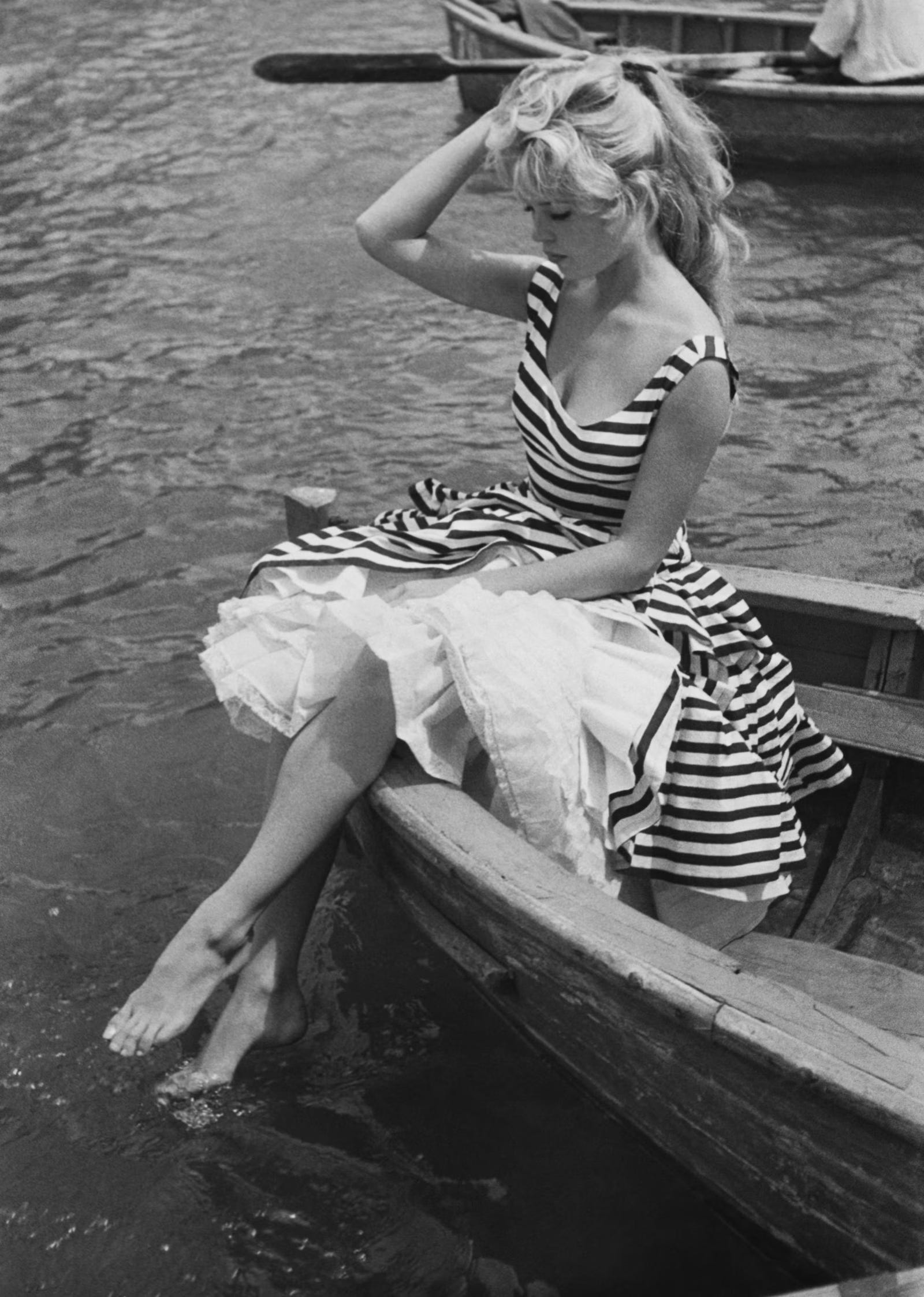
For me, the discovery of Bardot far preceded serious involvement with French culture, but may well have been instrumental in starting it: she was an outstandingly successful exponent of the concept yet to be invented of soft power in diplomacy. The same applies to the other great French beauty who inflamed my teenage years, Francoise Hardy. I didn’t get into things French via Descartes and Proust but Bardot’s legs and Hardy’s cheekbones. OK, legs actually. Hardy and Bardot were very different animals: in automotive terms, if Hardy was a demure and stylish but somehow economically envisageable Renault Floride, Bardot was a Ferrari, twelve cylinders of such unattainable gorgeousness as to represent a completely different level of aspiration, and one with a waiting list of the most eligible playboys on the planet. Many of whom she indulged herself in. Bardot was a busy collector of lovers while Hardy remained remarkably faithful to her early husband, the singer Jacques Dutronc, even though they lived apart.
I took my teenage self off to see my first Bardot film almost surreptitiously, like sneaking into a massage parlour. It was the 1958 En Cas de Malheur, In Case of Adversity, some years after it came out, and the scene in which Bardot lifts her skirt to seduce Jean Gabin’s middle aged lawyer seemed like the most outrageously lascivious vision possible to be dreamt up by the human imagination, a hundred times more potent than the Spanish star Lola Flores, who caused devout spectators to make the sign of the cross when she came on stage. Later I met elderly French people who really had vilified Bardot as people might today that woman who has sex with a hundred men simultaneously as a Tiktok stunt.
Keener on music than film, I listened to Hardy’s records avidly, butI never paid much attention to Bardot’s singing, and it was only much later that I got to appreciate in a kitsch sort of way BB’s Gainsbourg-authored numbers like Mustang and Bonnie and Clyde. Hardy, of course, got better and more musically respected, and when I eventually met her turned out to be a captivating woman, as beautiful as ever, serious and thoughtful. She was one of very few artists who wrote to me with comments when an interview was published. My last personal interaction with Francoise Hardy was when she replied to another request for an interview that she was ill. I wrote back saying I hoped she’d recover soon, to which she answered simply “I won’t recover”.
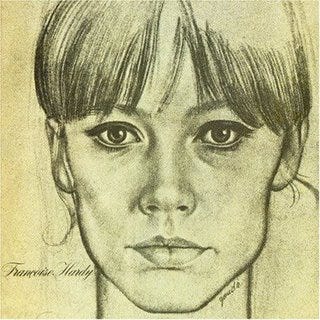
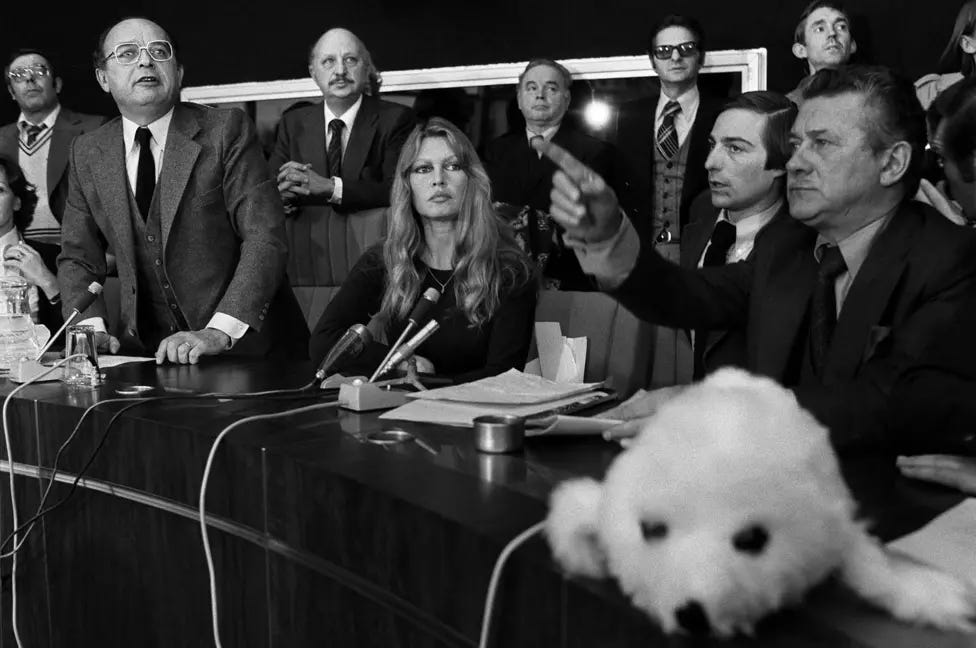
Long before that, the thirty-nine year old Bardot had abandoned her film career for full time animal activism. From then on her public image was a slightly condescending perception of the actress obsessed with the bebe phoques, the young seals which used to be clubbed to death for their white fur in Greenland. In fact she was selling all her possessions to set up her foundation and travelling the world with the influential companions her fame had given her access to, single-mindedly attacking wrongs, stopping the brutal gypsy showbusiness trade of dancing bears in Bulgaria, quite possibly instigating the fashion in the UK for adopting stray dogs abandoned in Romania.
It was at this time that she moved, for polite society, into the sphere of the “far right” This is a theoretical realm of which any opinion or policy, no matter how reasonable and widely held, must automatically be anathemised as fascist by the bien pensant professional classes, which explains the current success of the Front National with voters. In 1992 Bardot met and married her fourth and last husband, Bernard d’Ormale, an associate of Jean-Marie Le Pen, founder of the party..
As if that wasn’t bad enough, Bardot’’s uninhibited public pronouncements came increasingly into conflict with the tightening legal framework criminalising insults, above all those capable of being characterised as racist, the summum of all evil. Her 1997 autobiography Initiales BB earned her a number of prosecutions for comments on the cruelty and alien nature of Islamic halal butchery and the excessive scope of immigration, and she was sued by her second husband and their son for describing the horror she’d felt at the unwanted pregnancy. The degree of establishment animosity she faced then is worth recalling via old TV footage such as the talk show in which she defended herself with dignity against an unstoppable barrage of yapping condemnation from a puffed-up young presenter for France 3 state TV, with a studio audience sporadically plucking up enough courage to defy the Rive Gauche morality gendarme and applaud her.
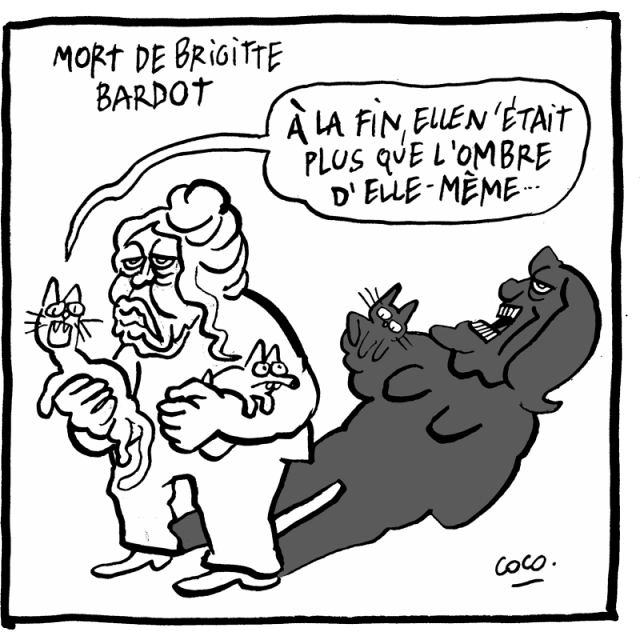
Bardot’s “far right” image still clings to her, incidentally, and the idea of arranging a national memorial event, as happened most recently for Johnny Hallyday, has created some disagreement, with the mealy-mouthed Socialist leader Olivier Faure opining that Bardot doesn’t merit the honour as she’d “turned her back on Republican values” It’s interesting that following her death, the usual criticism has been muted, and the left wing paper Liberation, normally first off the blocks to lambast perceived fascism behind every lamppost, ran a particularly balanced editorial pointing out how Bardot’s views were the purest manifestation of the period which she’s celebrated as being a glorious monument to, “just as the Eiffel tower if it could speak would have the opinions of the nineteenth century” .Rather nifty I thought..


But to return to moi. It was during this period, with media attention providing good reason for her to be on guard, that I came on the scene, another occasional nuisance petitioning for interviews from the UK. At one point I was making a radio programme about Serge Gainsbourg, who after a whirlwind three month affair with Bardot to the great dudgeon of her husband the Opel heir Gunther Sachs.had kept in touch with BB, supporting her work with regular cheques. The BB Foundation liaised helpfully but it turned out she wasn’t going to be in Paris when we were and the budget didn’t extend to a separate jaunt down to Saint Tropez Failure number one.
By now I realised that Bardot herself was a subject of major importance for someone interested in French popular culture, and started trying to meet her. One day I got a message on the answering machine. Bernard d’Ormale, could I call back. A very polite discussion ensued. Could I send a list of questions which she’d reply to in writing. It wouldn’t be the same, I replied. Well what did I want to ask: you know she only wants to talk about her animal work? I burbled on about how that was of course vitally important but her pivotal role in French culture was too, and her politics and her music, so overlooked. A textbook lesson in clumsiness. Shut up you idiot, I should have said to myself, stick to ANIMALS! But I ploughed on, digging myself in deeper, trying to impress d’Ormale by mentioning a couple of prominent music journalists I used to talk to from Le Monde and Liberation. This was a ploy about as smart as trying to clinch a meeting with Margaret Thatcher by telling her what good terms you were on with Socialist Worker. That appointment fizzled too.
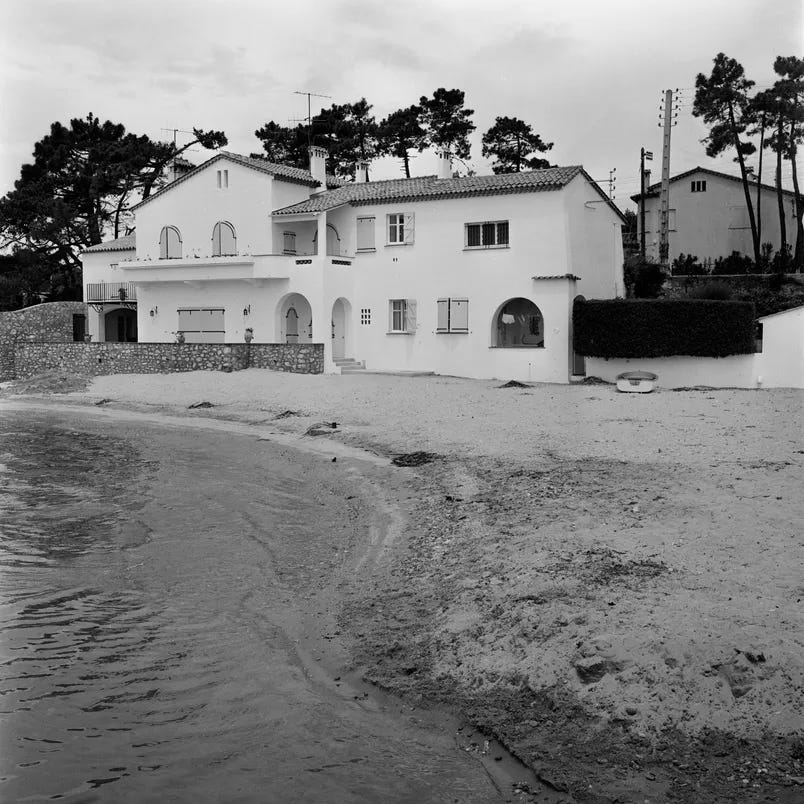
Dogged being my middle name, I returned to the fray in 2018, enlisting the support of Anne-Cecile Huprelle, who had just co-written Bardot’s latest book,Larmes de Combat. The Telegraph agreed to commission an interview and stump up some modest expenses. I eventually got a reply from d’Ormale asking me to phone La Madrague. A woman answered. Can I speak to Mme Bardot? Yes, it’s me, said the voice. That’s Brigitte Bardot? I blurted, to which Bardot assented, with a slight chuckle at my gaucheness. Whatever, bingo! she agreed to see me if I came to Saint Trop. But when...? She didn’t like to make appointments much in advance, she said, call me again when you’re coming. What I should have done was jet instantly to Saint Tropez and check into the Hotel de la Ponche, sending five dozen roses and a hamper of premium cat food daily to La Madrague till she said OK, come on round. What I actually did was sit at home emailing d’Ormale and Bardot without reply, fretting over Ryanair prices and wondering how the Telegraph would react to a massive bill for Kirs Royales and no interview if Bardot stood me up. I’d got my fingers burnt that way befoore, hunting Charles Trenet and Charles Aznavour in the grand hotels of Cannes. After a fortnight with no reply from Saint Tropez the window of opportunity closed along with my last chance, as Bardot’s health began to deteriorate.
The last time Bardot enlightened my life was last summer after the death of her contemporary, friend and fellow political cancellee Alain Delon, often likened for his extreme good looks to a male Bardot. My wife was ill in hospital and to divert her for an evening we looked together through the pics of Delon’s funeral and life and times of the other glamorous figures of the era - Francoise Dorleac, Mireille Darc, Isabelle Adjani - who Lizzie, a painter, also revered for their physical aura, a hint of which she had once herself possessed.
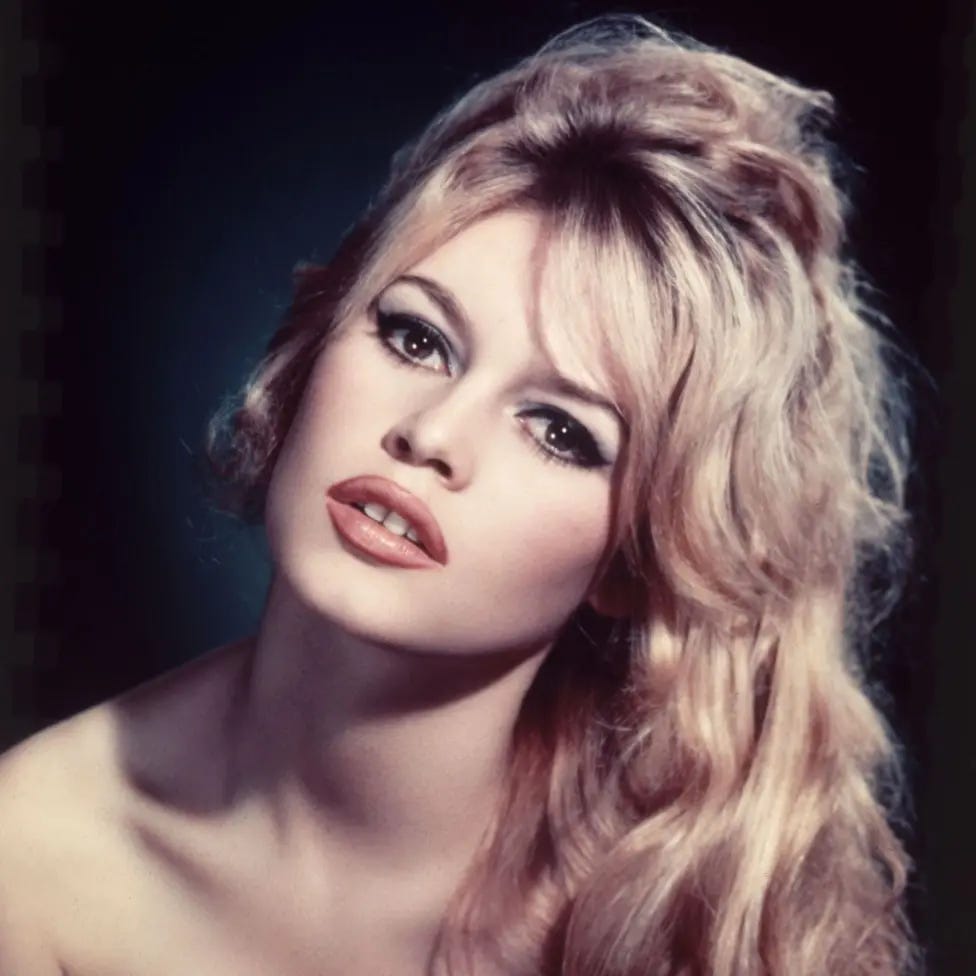
Why did Bardot stand out so dazzlingly among such illustrious company? And aren’t they all just pretty women anyway? A phrase of the writer Fabrice Gaignault seems to me to put it rather well: “the almost supernatural harmony between her body, her face and her attitude” Although in Bardot’s case, that was not all. Stunningly beautiful when young, honest, brave and compassionate to the helpless when old. In retrospect, my teenage self was obviously onto something.
Soundtrack
A few pieces, more of historical interest than strict musical quality. As has traditionally been the case with French actresses, music was a considerable sideline of Bardot’s career, and a good deal of popular song was written about her.
Bardot: La Madrague
An early almost childish ditty about the beach house which Bardot used all her life, full of classic period references to sun, sea and sand but not yet sex.
Bardot and Serge Gainsbourg: Je T’Aime, Moi Non Plus
The celebrated heavy breathing number written by, and recorded with, Serge Gainsbourg, but made famous in a later version by Gainsbourg and Jane Birkin. Apparently Gunther Sachs, who had married Bardot only a year earlier, was so pissed off at her not only having an affair with Gainsbourg but recording this virtually pornographic opus with him, that he managed to stop it being released.
Dario Moreno: Brigitte Bardot
A rumbustious hommage by the remarkable Moreno, a dynamic and cosmopolitan Turkish-Jewish singer, composer, and bandleader who bestrode Mediterranean showbusiness in the 1950s before an early death by heart attack trying to catch a plane.
The Gypsy Kings: La Dona
A bit messy, a bit easy listening, far from the best thing this group has done, but a track dedicated to BB by a Southern French gypsy group of Spanish origin which achieved world fame in the 1980s but started out playing the bars and parties frequented by Bardot and her set in Saint Tropez.
Tom Ze: Brigitte Bardot
A Brazilian song by an important creative force of the late twentieth century, reflecting both the global reach of the BB phenomenon and the great popularity of Brazilian music in 1960s France. And one musing not on Bardot’s glorious youth but solitude in old age, a subject Bardot herself spoke unsentimentally about in her final years.
Great story - how tantalisingly, infuriatingly close …